For inquiries about Carmen and Son Concrete and their completed projects, you can reach us at (847) 699-9700 to learn more about our concrete services.
Driveways

Brush Finish
California Finish
California Finish
Great for gription
Water Flow
Pitch
Fantastic Modern Look
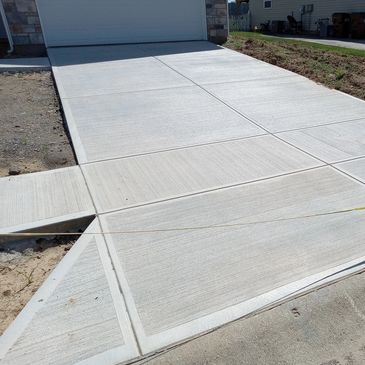
California Finish
California Finish
California Finish
Beautiful Elegant Design
Smooth Joints
New style
Distinct pattern

Checker Board Design
Checker Board Design
Checker Board Design
Less is more with the checker board design.
Keeping both simplistic and free style look.
Easy for water flow.
Looks gorgeous in the bright sun.

Saw Cut Joints
Checker Board Design
Checker Board Design
Great for working projects.
Minimize future cracks.
Easy to clean.
More durable.
Less water flow.
Cement Driveways
Built to Last: Why Cement Driveways Dominate Modern Home Exteriors
Specs;
5000 PSI, 6 Bag Mixture
Rebars
Wire - Mesh
CA6 Compacted Base Gravel
Expansion Joints
Sealer
Micro - Fiberglass
Flash (if needed)
Few home upgrades deliver the long-term value and resilience of a well-installed cement driveway. Known for their durability, cost-efficiency, and sleek, customizable finishes, cement driveways have become the top choice for homeowners seeking a balance of function and form. In climates like Chicago’s, where freeze-thaw cycles and heavy snowfall test structural integrity, properly poured and maintained cement slabs outperform alternatives by resisting cracking, settling, and surface degradation.
Cement driveways stand out due to their strength—typically poured at 4,000 psi or higher—and their ability to withstand years of vehicle traffic, foot traffic, and seasonal shifts. When enhanced with air-entrained concrete or fiber reinforcement, these surfaces gain added resistance to spalling and micro-cracking caused by moisture expansion. Additionally, their smooth, seamless finish allows for easy snow removal and minimal debris buildup.